
Online SEND and Teacher CPD courses
Why not join 10,000 schools who've partnered with us to improve the confidence and skills of their teaching team and provide a more inclusive experience for pupils with SEND?
We ensure your team has the right skills at the right time to support all children and young people with Special Educational Needs and Disabilities (SEND) and provide quality first teaching.
Discover why 85% of users rate a significant increase in confidence after completing our courses and talk to us today.
Before and after
Confidence in supporting SEND learners with disability
Before OLT course
 42%
42%
Very or fairly confident
After OLT course
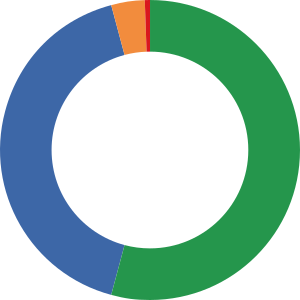 96%
96%
Very or fairly confident
- Very confident
- Fairly confident
- Somewhat confident
- Not confident
Source: OLT data 2026
Our courses can be accessed through...
A STEPS school subscription
Unlimited staff, one price: all 12 STEPS courses at three levels, our short courses, and the tools to track your staff's progress.
Start free with one STEPS course for all your staff for 4 months.
An organisation licence
Our tutored courses, delivered by an OLT expert tutor or your own trained tutors, for local authorities, services and organisations. Short courses are included.
Free for parents and carers
Our parents' course is free for anyone to take, with an optional certificate on completion.
STEPS
STEPS gives your whole staff, from teaching assistants to senior leaders, practical, evidence-based SEND training in 5–10 minute chapters that fit around the school day.
The 12 STEPS courses, by area of need
Communication & Interaction

Autism
Distinguish autism from other difficulties and find out how to adapt classroom practice to meet the need of this group.

Speech, Language and Communication Needs
Understand how speech and language difficulties can impact key curriculum areas and social inclusion.
Cognition & Learning

Dyslexia and Significant Difficulties in Reading
Understand the concept of dyslexia, the challenges faced by this group and how they can be overcome.

Learning Strategies
Enhance your knowledge of learning theories and how to translate theory into inclusive classroom practice.
Social, Emotional & Mental Health

Attachment and Trauma
Find out about the impact of childhood trauma on relationships with parents / carers and progress in school, and trauma informed practice.

Attention Deficit Hyperactivity Disorder
Recognise signs of ADHD, and learn how to adapt classroom practice to help these CYP thrive.

Mental Health and Wellbeing
Explore the concepts of wellbeing and mental health, and effective strategies to support learners and staff.

Understanding and Supporting Behaviour
Managing behaviour is a challenge for all staff. Learn how to support, respond and reduce behavioural events.
Sensory &/or Physical

Deafness
Understand the causes of deafness and identify best practice for supporting deaf learners.

Dyspraxia and Motor Coordination Difficulties
Understand how motor coordination difficulties impact learning and social behaviour, and how best to help them.

Multi-Sensory Impairment
The causes, implications, and strategies involved when working with learners with multi-sensory impairment.

Vision Impairment
See the world through the eyes of learners with vision impairment, and identify best practice for supporting them.
New to STEPS? Start with one course free for all your staff for 4 months, or subscribe for all 12 courses and our short courses.
Find out more and register here →Tutored courses
Our tutored courses are developed in partnership with SEND specialists and leading institutions to reflect current evidence-based practice. They provide a secure knowledge of the graduated approach, an understanding of assessment checklists and techniques, a toolkit of interventions to differentiate learning, and a support plan to differentiate and personalise learning.
Communication & Interaction
Autism
Distinguish autism from other difficulties and find out how to adapt classroom practice to meet the need of this group.
Speech, Language and Communication Needs
Understand how speech and language difficulties can impact key curriculum areas and social inclusion.
Cognition & Learning
Dyslexia and Significant Difficulties in Reading
Understand the concept of dyslexia, the challenges faced by this group and how they can be overcome.
Learning Strategies
Enhance your knowledge of learning theories and how to translate theory into inclusive classroom practice.
Social, Emotional & Mental Health
Attachment and Trauma
Find out about the impact of childhood trauma on relationships with parents / carers and progress in school, and trauma informed practice.
Attention Deficit Hyperactivity Disorder
Recognise signs of ADHD, and learn how to adapt classroom practice to help these CYP thrive.
Mental Health and Wellbeing
Explore the concepts of wellbeing and mental health, and effective strategies to support learners and staff.
Understanding and Supporting Behaviour
Managing behaviour is a challenge for all staff. Learn how to support, respond and reduce behavioural events.
Sensory &/or Physical
Deafness
Understand the causes of deafness and identify best practice for supporting deaf learners.

Deafness (Further Education)
Comprehend the challenges faced by the deaf. Know how to monitor and adapt the learning environment to meet their needs.
Dyspraxia and Motor Coordination Difficulties
Understand how motor coordination difficulties impact learning and social behaviour, and how best to help them.
Multi-Sensory Impairment
The causes, implications, and strategies involved when working with learners with multi-sensory impairment.
Vision Impairment
See the world through the eyes of learners with vision impairment, and identify best practice for supporting them.

Vision Impairment (Further Education)
Comprehend how a learner with a vision impairment can be accommodated and supported in a more adult learning environment.
Short courses
Our self-paced short courses cover essential topics in SEND and inclusive practice. They are not tutored, and they are available to licence holders: schools with a STEPS subscription and organisations with a tutored licence.

Learning Theory
An introduction to the Learning Theories in education and how learning takes place.
SEND Code of Practice 2015
Making the SEND Code of Practice more accessible for education professionals.

Working in Partnership with Parents
Understanding the needs, issues, and requirements for support of the parents and carers of children with SEND.
Parent courses
Our parent courses are free for anyone to take and are not supported by a tutor. If you complete a course and would like to print a certificate of achievement, there is a small fee unless your organisation holds a licence.

Autism for Parents
An introductory understanding of autism for parents and carers.
Testimonials

Senior Leader
Teaching Assistant
Other Position
Ready to get started?
STEPS gives your whole school the SEND training it needs — all in one place.
Find out about STEPS